
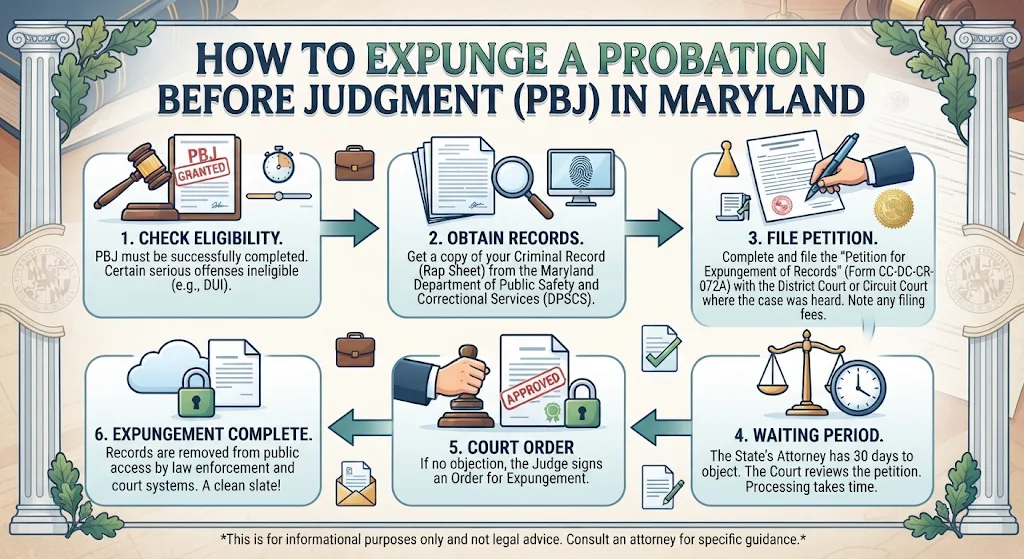
A probation before judgment, often called a PBJ, is not a conviction. Many people assume that means it disappears on its own. It does not. The case can still appear on Maryland Judiciary Case Search and in background checks until the record is expunged. If you want to know whether you can clear it and when, this guide walks through the real timeline, the mistakes that delay approval, and the practical steps to take.
If you are still trying to understand what a PBJ is and who qualifies for one, start with our explainer here: https://www.houlonberman.com/blog/probation-before-judgment-pbj-in-maryland-what-it-is-who-qualifies-and-whether-its-a-conviction/. This article picks up after the case is over and focuses only on cleaning up the record.
Why a PBJ Can Still Hurt You
Employers, landlords, and licensing boards often run searches that pull court data, not just conviction data. A PBJ entry can raise questions in a job interview or a rental application even though you were never convicted. Expungement removes the case from public view, which is why it matters for jobs, housing, school applications, and professional licenses.
The Maryland PBJ Expungement Timeline
For most PBJ cases, you generally cannot file until the later of two dates:
- The day you are discharged from probation, or
- Three years after the court entered the PBJ.
So a one year probation does not shorten the wait. The three year mark controls. A longer probation term can push your date past three years.
Some cases follow different rules. A PBJ for certain drunk driving offenses under the Transportation Article has a much longer wait of fifteen years after discharge from probation. If your PBJ involved a DUI or DWI charge, confirm your exact date before you file anything.
A court may also grant an early petition for good cause, but the State’s Attorney can object, so filing early is a calculated risk rather than a shortcut.
What Competitors Rarely Tell You: The Three Traps
Most articles stop at the waiting period. In practice, these three issues cause the most denied or delayed petitions.
1. A new conviction during the waiting period. If you are convicted of a new crime (other than a minor traffic violation) within three years of the PBJ, the petition can be blocked. In some situations it becomes eligible again only if the new conviction is itself eligible for expungement.
2. The unit rule. Maryland treats charges from the same incident as one unit. If any charge in that unit is not eligible, the other charges in the same case can be held up too. A PBJ on one count does not help if a conviction on another count from the same event is not expungeable.
3. The civil claims waiver. For many petitions, you must sign a general waiver and release of tort claims tied to the charge. If you were considering a civil claim for wrongful arrest or similar harm, deal with that decision before you sign.
Step by Step: How to File
- Pull your case record. Look up your case number, disposition date, and probation end date. Do not guess. Your timeline depends on exact dates.
- Confirm eligibility. Check the waiting period, any later convictions, and whether the unit rule affects you.
- Complete the official petition. Maryland courts require their own petition form. Include the case number, the court, and the disposition.
- File in the right court. File in the court that handled the case, and pay any fee or request a waiver if you qualify.
- Serve the required parties. The State’s Attorney and other agencies holding records must receive notice.
- Watch the objection window. If the State objects, a hearing may be set. If there is no timely objection, the court can grant the petition without one.
- Follow up after approval. Once granted, agencies must shield or remove the records. Recheck Case Search later to confirm the case no longer appears.
What Expungement Does and Does Not Do
Expungement removes the case from public access and lets you answer most background questions about it as if it never happened, with limited exceptions. It does not guarantee that every private database erases the entry on its own. Some data brokers copy court records, so you may need to send correction requests after the court order.
When to Talk to a Lawyer
You can file on your own, but a lawyer helps when your case has multiple charges, a DUI related PBJ, a new arrest in the last few years, or a pending job or license decision. A small error in dates or eligibility can cost months. Maryland expungement law has also been updated several times in recent years, so current rules matter. This article is general information, not legal advice for your case.
Q&A
Is a probation before judgment automatically expunged in Maryland?
Not always. Some eligible cases may be handled through automated processes, but many people still need to file a petition. Check Case Search first, then confirm with the court or an attorney.
How long do I have to wait to expunge a PBJ?
Generally the later of your probation discharge date or three years from the PBJ. Certain drunk driving PBJs have a fifteen year wait after discharge.
Can I expunge a PBJ if I was arrested again?
It depends. A new conviction inside the waiting period can block the petition unless that new conviction later becomes eligible for expungement. A new charge without a conviction is treated differently, but it can still complicate timing.
Will a PBJ show up on a background check?
It can. Because it is a court record, it may appear on checks that pull court data until it is expunged.
Do I have to tell an employer about an expunged PBJ?
In most situations, no. Maryland law generally lets you answer as though the expunged case did not occur, though a few narrow exceptions exist. A lawyer can tell you whether one applies to your license or job.
Can I file before the waiting period ends?
You can ask the court for good cause, but the State’s Attorney may object. Many people wait for the clean date to avoid delay.
Does expungement cost money?
Court fees may apply, and fee waivers are available for those who qualify. Attorney fees are separate if you hire one.